

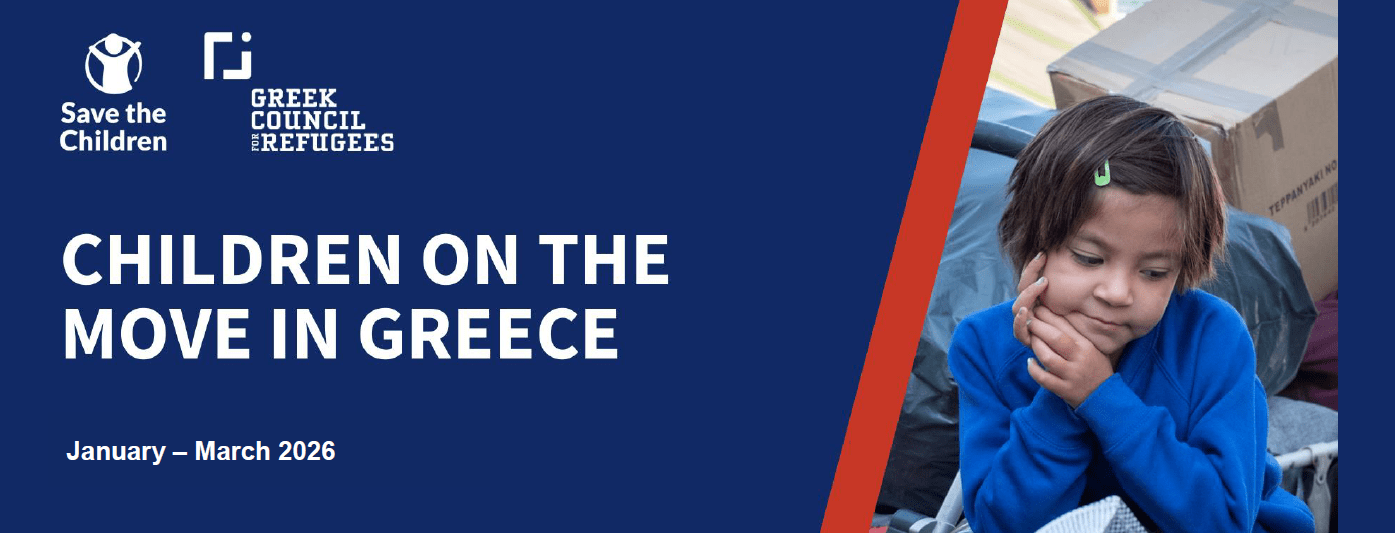
The Brief on the situation of the rights of the children on the move for January-March 2026 by the Greek Council for Refugees (GCR) and Save the Children..
This issue highlights that children arriving in Greece are not only navigating dangerous journeys, but systems that too often fail to protect them.
Despite a decrease in overall arrivals in 2025, Greece remains a key entry point into the EU with children representing 20% of the overall arrivals (almost 10k), and 1/3 among them being unaccompanied or separated. This is one of the largest numbers of asylum claims from unaccompanied children in the whole EU. Yet, no relocation of unaccompanied children took place in 2025 καμία μετεγκατάσταση ασυνόδευτων παιδιών. The lack of solidarity overstretches systems, weakens safeguards and contributes to no accountability for the continued loss of life at sea.
Another tragedy at sea allegedly caused by national authorities
In February 2026, 15 people, including children, died in a boat collision off Chios. “We came here for protection… "Suddenly, one big boat just came and crashed into us. People must know — it was not an accident.” Says one of the survivors, highlighting broader concerns around accountability, in light of repeated ECtHR findings of violations of the right to life and ineffective investigations - amplifying risks to life, particularly for children.
Children are prosecuted for their own survival
Children - some as young as 15 - are being charged with “smuggling” for steering boats, often under coercion.
Rollback of protection for children turning 18
The removal of residence permits for formerly unaccompanied children undermines access to education, stability and integration.
Criminalisation of solidarity
New legislation risks criminalising NGOs and restricting civil society space - at a time when their role is essential to safeguard children’s rights.
Erosion of age assessment safeguards
With the new law, children wrongly assessed as adults risk losing protection entirely. Moreover, medical tests prioritised, appeals are shortened and the presumption of minority weakened, in contrast with the European rules coming into force in 2 months.
No food for families
For nearly 21 months, asylum seekers in Greece have received no cash assistance. Families report being unable to buy food or medicine, access healthcare, cover basic needs . “The first thing I would do is buy food for my children.”
Greece and the EU must:
- Protect civil society space
- End the criminalisation of children and people seeking safety
- Restore safeguards in age assessment
- Ensure protection pathways for children turning 18
- Reinstate cash assistance and dignified reception conditions
Read the new joint brief here

